

Standing Tall in the Woods
If you’re driving through Northern Michigan and spot a gleaming bronze figure towering above the trees, you’ve likely stumbled upon Cross in the Woods National Shrine in Indian River. It’s one of Michigan’s most unique landmarks, part art, part architecture, part outdoor sanctuary. The 55-foot redwood cross crowned by a massive bronze Christ draws visitors from all over the world. What surrounds it, the wooded walkways, the smaller shrines, and the peaceful air of devotion turns a simple stop into a memorable experience.
A National Shrine in the North Woods
Located at 7078 M-68 in Indian River, Cross in the Woods is both a working parish and a National Catholic Shrine. It was designated as such in 2006 by the U.S. Conference of Catholic Bishops. Every year, an estimated 250,000 to 300,000 people visit the site. Some on pilgrimage, some out of curiosity, and many who return year after year for reflection and renewal.
The shrine’s setting is part of its magic. Surrounded by tall pines and quiet trails, it feels remote and serene, yet it’s just minutes off I-75. Whether you’re on a family road trip or exploring Michigan’s scenic byways, Cross in the Woods offers a rare blend of grandeur and simplicity, faith expressed through nature.
How It All Began
The shrine’s story begins in the mid-1940s. Bishop Francis Haas of Grand Rapids tasked Father Charles D. Brophy with establishing a new parish in Indian River. Local Catholics had been traveling long distances to attend Mass at St. Monica’s in Afton, often on rough, unpaved roads. Brophy envisioned something extraordinary, a church that blended with the forest and a monumental crucifix that would inspire reflection.
Land acquisition for the church initially faced challenges. The Michigan Department of Conservation first denied access to a section of Burt Lake State Park, but persistent efforts paid off. In 1948, the state granted the land for $1 and a box of candy for the secretary. The original church, completed in 1949, was designed by Alden B. Dow, a student of Frank Lloyd Wright. He used long low lines to echo the natural bluff and the design of a “long house” used by Native Americans. Today, this area houses the gift shop, main office, and the Nun Doll Museum.
 Building the Iconic Cross
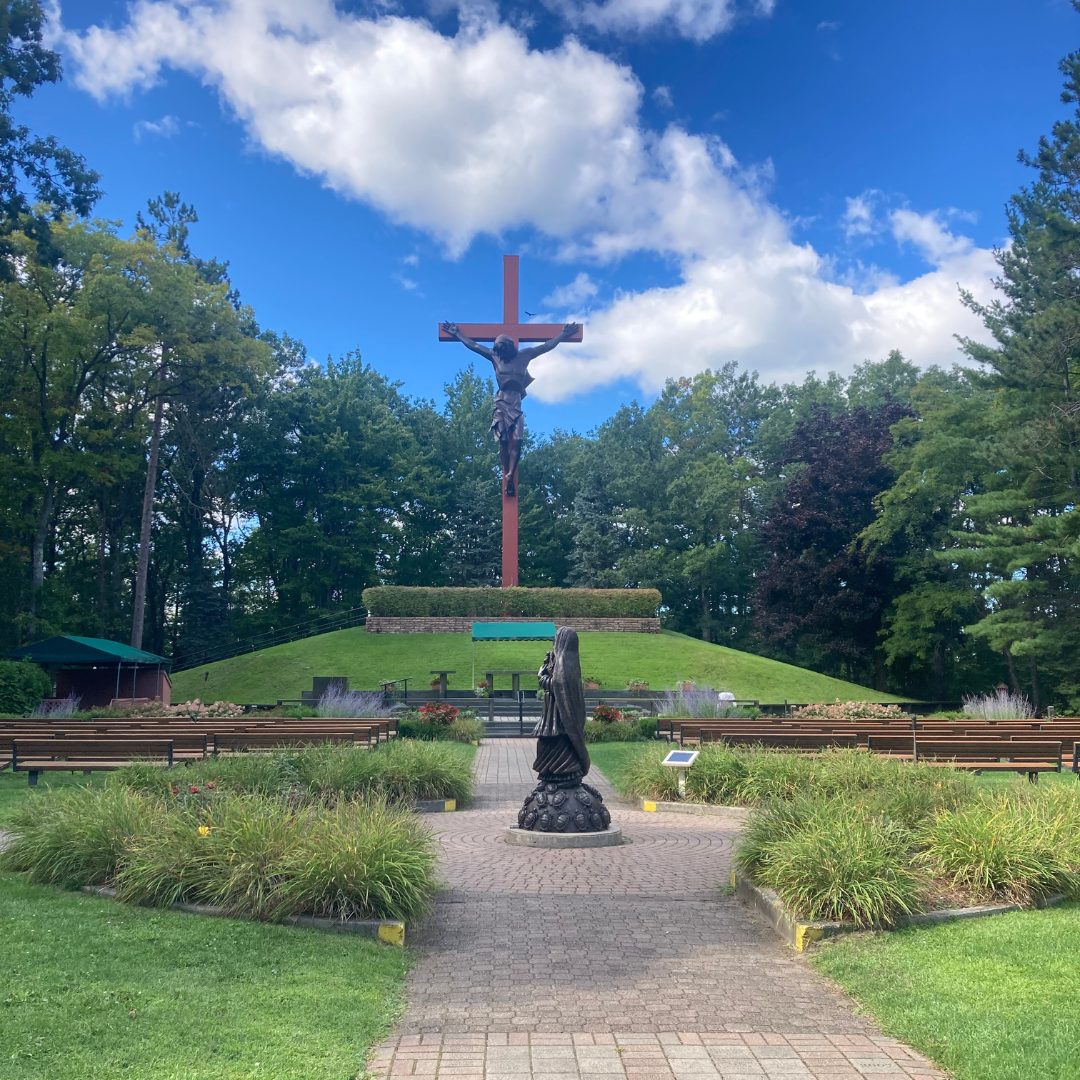
In 1954, the vision took physical form. Rising from Calvary Hill, a 55-foot redwood cross crowns a hill carefully crafted to honor its sacred namesake. The hill itself was about 150 feet long and 15 feet high. The cross was made from redwood shipped from Oregon, chosen for its resistance to rot and insects and anchored with steel and concrete.
But it was the bronze figure of Christ, designed by renowned sculptor Marshall Fredericks, that transformed the structure from impressive to iconic. Fredericks spent years perfecting the design, crafting a figure both majestic and compassionate. The final sculpture stands 28 feet tall and weighs over 7 tons, depicting Christ suspended in a pose of peace rather than pain. Installed in 1959, it remains one of the largest crucifixes in the world.
The Holy Stairs and Outdoor Sanctuary
Not long after, the Holy Stairs were added, 28 steps leading up to the base of the cross, mirroring the steps Jesus climbed to Pontius Pilate’s judgment hall. Visitors are invited to ascend the stairs in prayer, a quiet act of reflection and pilgrimage.
Around the cross, a network of walkways and seating areas formed what would become the outdoor sanctuary, used during summer months for Masses and gatherings. As the shrine grew, it became not only a site of devotion but a beloved piece of Michigan’s cultural landscape.
The New Church
By the 1990s, parishioners wanted a larger church that offered a year-round view of the cross. The new church, completed in 1997, seats 1,000 worshippers and features large windows framing the cross outside. Whether attending Mass indoors or exploring the grounds, the cross remains the central focus, a testament to Father Brophy’s enduring vision.
The Eight Shrines of Cross in the Woods
The Cross in the Woods grounds feature eight smaller shrines, each highlighting a unique figure of faith or devotion. Visitors often experience these shrines as a gentle journey, moving from inspiration to reflection along forested paths.
Shrine of Our Lady of the Highway
Installed in 1957, this statue of Our Lady of the Highway was carved from white Carrara marble and is a favorite of travelers. She stands with arms gently outstretched, watching over those journeying through Michigan’s forests and along its winding highways. Pilgrims often leave small tokens or prayers for safe travel, making it one of the shrine’s most frequently visited spots.
Shrine of St. Peregrine
No saint could be more fitting for a woodland shrine than St. Kateri Tekakwitha, known for her deep love of nature and devotion to Christ. Canonized in 2012, Kateri was the first Native American saint. Her statue shows her gazing peacefully toward the great cross, with a small turtle at her feet representing her father’s Turtle Clan. The setting feels particularly sacred, as if her spirit still lingers in the rustle of the pines.
Shrine of St. Kateri Tekakwitha

Known as the “Lily of the Mohawks,” Kateri’s statue faces the cross, a symbol of her devotion to Christ and love of nature. No saint could be more fitting for a woodland shrine than St. Kateri Tekakwitha. She was known for her deep love of nature and devotion to Christ.
Shrine of St. Francis of Assisi
Added in 1994, this statue of St. Francis of Assisi, the patron saint of ecology and animals, embodies gentleness and humility. He stands amid natural landscaping, birds often nearby, facing the cross with open arms. Many visitors bring their pets here for a blessing on the Feast of St. Francis, creating a joyful and very Northern Michigan kind of holiness.
Shrine of the Holy Family
This sculpture, titled A Quiet Moment, was created by Canadian artist Timothy Schmalz, known for his expressive bronze religious works. The statue portrays Mary, Joseph, and the young Jesus in a tender moment of rest and connection. Families often pause here for photos or quiet prayer, making it one of the most relatable and heartwarming stops on the grounds.
Shrine of Divine Mercy
Dedicated to the message revealed to St. Maria Faustina Kowalska, the Divine Mercy Shrine represents God’s infinite compassion. It features the well-known image of Jesus with red and pale rays flowing from His heart, a symbol of mercy and forgiveness. During the Church’s Year of Mercy, this shrine became a pilgrimage site for those praying the Divine Mercy chaplet. Many visitors light candles or recite the chaplet at 3:00 p.m., the traditional “hour of mercy.”
Shrine of Venerable Bishop Frederic Baraga
Known as the “Snowshoe Priest,” Bishop Frederic Baraga was a 19th-century missionary who braved Michigan’s harsh winters. He brought the Gospel to Native American and immigrant communities. His shrine honors not only his missionary zeal but also his scholarship. Baraga created a lasting Ojibwe dictionary and prayer book still respected today. His statue shows him holding a crucifix and snowshoes, symbols of faith carried through hardship.
Shrine of Blessed Fr. Michael McGivney
The newest addition honors Blessed Father Michael McGivney, founder of the Knights of Columbus. Beatified in 2020, McGivney dedicated his life to supporting families, widows, and orphans — values that resonate deeply with the spirit of Cross in the Woods parish. His shrine recognizes the Knights’ long partnership with the shrine’s mission and their charitable works across Michigan. The statue portrays McGivney in priestly vestments, offering a gesture of welcome and service, a fitting emblem for a site rooted in community faith.
The Nun Doll Museum — A Delightfully Quirky Treasure
One of the shrine’s most surprising features is its Nun Doll Museum, home to more than 500 dolls dressed in authentic religious habits. The collection began in 1964 when Sally Rogalski donated 230 dolls to the shrine, requesting that no admission fee ever be charged. Over time, the museum grew into an international display of religious life, featuring sisters and brothers from hundreds of orders across the globe.
It’s equal parts endearing and educational, a celebration of the diversity of service and devotion that makes up the Catholic Church. Many visitors who come for the cross leave talking about the dolls. Proof that this quiet museum has charm all its own.
 Preserving Art and Faith

Outdoor sculptures in Northern Michigan’s climate need constant care. Over the years, Cross in the Woods has undergone several preservation projects. This includes cleaning and re-waxing Marshall Fredericks’ bronze Christ and sealing the redwood cross against moisture. Volunteers and donors play a major role in maintaining the grounds. The shrine’s caretakers ensure that both the natural and artistic elements remain as awe-inspiring as the day they were unveiled.
Planning Your Visit
- Open year-round: The shrine grounds are accessible daily from sunrise to sunset.
- Mass times: Services are held throughout the week in the indoor church; check the shrine’s official site for current times.
- Accessibility: Paved paths make most of the site accessible for wheelchairs and strollers.
- Best photo spots: The base of the Holy Stairs, the St. Kateri shrine, and the view from the church’s main windows.
- Gift shop and museum: Open seasonally, offering religious items and local souvenirs.
Whether you stay 15 minutes or spend an afternoon, there’s a peaceful rhythm here. Take the invitation to slow down and breathe.
Why Cross in the Woods Matters
Cross in the Woods is more than a tourist stop or a local church. It’s a place where art, faith, and community meet. It was not built by corporations or wealthy patrons, but by ordinary parishioners and volunteers with extraordinary devotion. It honors saints and missionaries, but it also celebrates everyday holiness. The quiet work of caring for others, tending the land, and keeping faith alive in the heart of the forest.
