
Michigan’s “Root Beer Falls” Adventure
If you’re headed to Michigan’s Upper Peninsula, you simply have to make time for Tahquamenon Falls State Park. With nearly 50,000 acres of unspoiled wilderness, over 35 miles of hiking trails, and waterfalls that roar with power and beauty, this place is pure “Up North” magic. Whether you’re hiking, camping, snowshoeing, or just soaking in the sights, Tahquamenon is one of those destinations that captures your heart and keeps calling you back.
The Mighty Upper and Lower Falls
Tahquamenon Falls is really a set of waterfalls along the Tahquamenon River—each with its own character and charm.
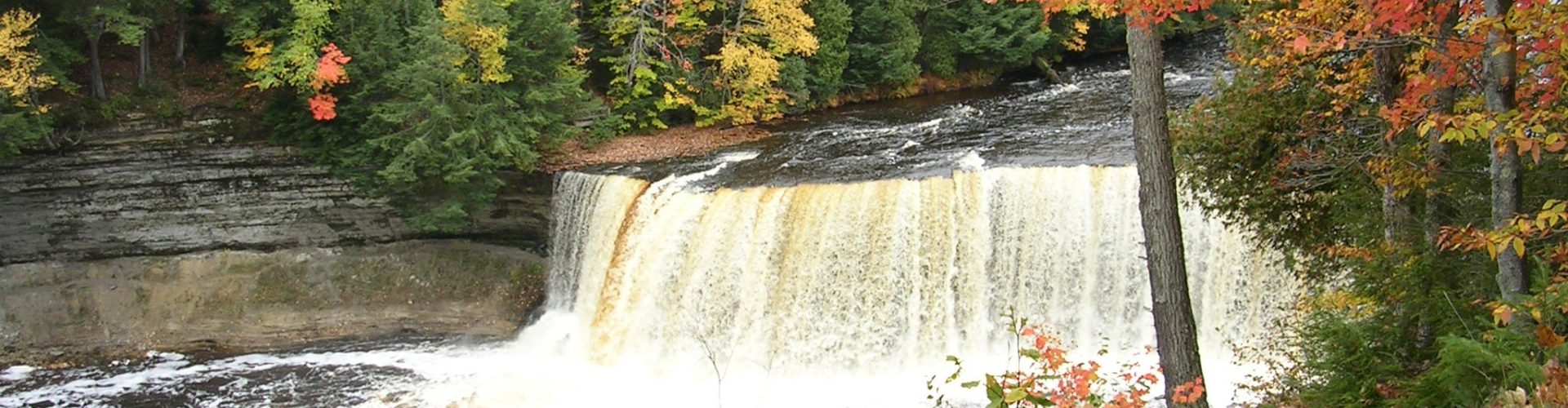
The Upper Falls is the showstopper. Over 200 feet wide and dropping nearly 50 feet, it’s one of the largest waterfalls east of the Mississippi. During spring runoff, as much as 50,000 gallons of water per second thunder over the edge! The amber-brown color—earning it the nickname “Root Beer Falls”—comes from natural tannins released by cedar swamps upstream. The sight (and sound) is mesmerizing, especially after heavy rain when the water absolutely surges.
About four miles downstream, the Lower Falls offers a totally different vibe—five smaller cascades tumbling around a lush, forested island. You can walk along scenic boardwalks and overlooks, take the Ronald A. Olson Island Bridge, or rent a rowboat to paddle out for an even closer view. The bridge, added in 2021, makes the island accessible to everyone, including visitors with mobility challenges. It’s a stunning addition that blends seamlessly with the natural beauty of the park.
A Playground for Outdoor Lovers
Tahquamenon Falls State Park isn’t just about the waterfalls—it’s a full-on outdoor adventure destination. The park spans nearly 50,000 acres (making it Michigan’s second-largest state park), with 13 inland lakes, 24 miles of the Tahquamenon River, and miles of dense forests teeming with wildlife.
- Hiking: Over 35 miles of trails crisscross the park, including 16 miles of the North Country Trail. You can hike between the Upper and Lower Falls—about 4 miles one way—for an up-close encounter with the forest’s sights, sounds, and solitude.
- Camping: With multiple campgrounds and nearly 280 campsites, you can sleep under the stars surrounded by towering pines. The park also offers modern cabins and rustic lodges for those who like a roof overhead. Tahquamenon Falls Modern Camp Map and Tahquamenon Lower Falls Camp Map
- Fishing & Boating: Canoe, kayak, or row your way down the Tahquamenon River. Anglers will find walleye, pike, and trout in both the river and nearby lakes.
- Wildlife Watching: Keep your eyes peeled for white-tailed deer, foxes, black bears, beavers, moose, and over 125 species of nesting birds. Early mornings and quiet hikes often reward visitors with unforgettable sightings.
- Winter Fun: When the snow falls, the park transforms into a silent, frosted wonderland. Snowshoeing, cross-country skiing, and snowmobiling are popular ways to explore the trails, and the frozen falls are a spectacular sight, with ice formations in shades of blue and green.
No matter the season, there’s something magical about standing beside a waterfall that’s been carving its way through the wilderness for centuries.
The River That Ties It All Together
It’s impossible to talk about the falls without mentioning the Tahquamenon River itself. Stretching nearly 90 miles from a spring near Newberry to Whitefish Bay on Lake Superior, this river is the lifeblood of the park. Its calm stretches are perfect for paddling, while its rapids and falls show off the raw power of Michigan’s wilderness.
The Tahquamenon River and surrounding forests provide habitat for a thriving ecosystem—from sleek otters and curious porcupines to loons calling across still morning water. It’s easy to see why this region remains one of Michigan’s most beloved natural treasures.
A Touch of History
Long before Tahquamenon Falls became a must-see attraction, it was home to Ojibwe families who hunted, fished, and lived along the river. When European settlers arrived, the area became a hub for fur trading and logging, but nature has since reclaimed the land.
The name “Tahquamenon” (pronounced Tah-kwa-me-non) has several possible origins—it may refer to the river’s amber color, the abundance of blueberries, or even a word recorded by early Jesuit missionaries describing the area.
Poet Henry Wadsworth Longfellow immortalized the river in The Song of Hiawatha (1856), writing of Hiawatha building his canoe “by the rushing Tahquamenaw.” That line alone helped put the falls on the map.
In 1936, Michigan acquired the land around the falls from the U.S. Forest Service, and by 1947, the park was officially dedicated. Today, it draws more than half a million visitors each year—all eager to experience this stunning slice of the Upper Peninsula.
Visitor Info: Getting There, Hours & Fees
Tahquamenon Falls State Park has two main entrances—one near Paradise and another near Newberry—both off scenic M-123, which connects with I-75 at Exit 352.
📍 Address: 41382 W. M-123, Paradise, Michigan
🕗 Hours: 8 a.m. – 10 p.m., year-round
🎟️ Entry: A Michigan Recreation Passport is required for vehicle access. Non-resident daily passes are also available.
Plan to spend at least a couple of hours exploring, though you could easily fill a weekend hiking, camping, and photographing every angle of the falls.
Photography, Drones & Accessibility
Photographers flock to Tahquamenon year-round for good reason—the light filtering through the mist, the colors of fall, and the ice formations in winter are unforgettable. Drone use is permitted, though there are specific restrictions to protect visitors and wildlife, so always check the latest DNR drone policy before flying.
The park has made great strides in accessibility, particularly with the Ronald A. Olson Island Bridge and paved paths to the Upper Falls overlooks. There’s also a shuttle between some main sites for easier navigation.
Don’t Miss: Tahquamenon Falls Brewery & Pub
Yes, you can pair your waterfall adventure with a cold beer! Just steps from the Upper Falls sits the Tahquamenon Falls Brewery & Pub, serving up hearty meals and craft brews inspired by the park itself. Their signature Root Beer Falls Ale is a fan favorite—and the perfect nod to the amber waters of the river.
It’s one of the few places where you can enjoy lunch and a pint within earshot of a roaring waterfall. Now that’s a uniquely Michigan experience.
Tips for Your Visit
- Best time to visit: Each season brings something different. Spring runoff is powerful, summer is lush and green, fall colors are absolutely breathtaking, and winter ice formations are surreal.
- What to bring: Bug spray, rain gear, good hiking shoes, and a camera. Dress in layers—it’s often cooler near the falls.
- Stay nearby: Camp in the park or find lodging in Paradise, Newberry, or nearby Whitefish Point (another must-visit for lighthouse and shipwreck enthusiasts!).
A Northern Michigan Icon
Tahquamenon Falls State Park captures everything that makes Michigan’s Upper Peninsula so special. The untamed wilderness, stunning beauty, and endless opportunities for adventure. Whether you’re standing in the mist of the Upper Falls or paddling around the island at the Lower Falls, it’s easy to feel humbled by nature’s power and peace.
So pack your hiking boots, grab your camera, and head north. The “Root Beer Falls” are waiting—and they’re even more impressive in person.
Amenities and Services
Whether you’re planning a day trip to see the falls or a week of camping beneath the stars, Tahquamenon Falls State Park has everything you need for a comfortable and adventure-filled visit. Below is a list of the park’s amenities and services, complete with links and descriptions to help you plan your perfect Up North getaway.
Amenity / Service |
Description |
Boat Launch |
An accessible paved boat launch near the Rivermouth Campground (limited parking). Also a canoe/kayak launch in the Lower Falls day-use area. |
Fishing Pier |
A fishing pier located at the Rivermouth boating access site across from the Rivermouth Campground. |
Modern Restrooms |
Restrooms in both Lower Falls and Upper Falls day-use areas; Upper Falls ones are ADA-accessible. |
Observation Platform |
Multiple accessible viewpoints for Upper & Lower Falls. Includes a half-mile boardwalk at the Lower Falls, the Ronald A. Olson Island Bridge, and three paved-path viewing platforms at the Upper Falls. Drone use is prohibited on/above platforms. |
Picnic Area |
Accessible picnic areas at Whitefish Bay Picnic Area and the Lower & Upper Falls day-use zones; include picnic tables and charcoal grills (first come, first served). Additional non-accessible picnic area at “The Stables” between Upper & Lower Falls. |
Track Chair |
A specialized chair to expand mobility access beyond traditional wheelchairs; available free of charge. |
Vault Toilet |
Rustic vault-style toilets present in some areas of the park (especially less developed locations). |
Concessions / Store |
At the Lower Falls day-use area: the Lower Tahquamenon Falls Café & Gift Shop. At the Upper Falls day-use area: the privately-owned Tahquamenon Falls Brewery & Pub. Also a fee-based shuttle between Upper & Lower Falls (seasonal). |
Cross-Country Skiing |
Four miles of groomed trails in the Upper Falls area (including Lantern Loop and Giant Pines Loop); plus back-country opportunity park-wide. |
Fishing |
The Tahquamenon River supports species like brown trout, walleye, muskie, northern pike, yellow perch, smallmouth bass and more. Accessible shore fishing at Rivermouth Pines Campground. |
Hiking |
Extensive trail system (35+ miles) including segments of the North Country Trail; accessible hikes between Upper & Lower Falls and Backcountry Trails. |
Hunting |
Permitted in designated areas of the park; some zones near campgrounds/visitor areas are closed. Visitors must observe posted regulations. |
Nature Programs |
Seasonal naturalist-led programs during summer/fall and the “Fact Shack” visitor center for interpretive activities. |
Paddlesport Rentals |
Rowboat rentals available at Lower Falls Café & Gift Shop (Memorial Day weekend to mid-October, as river levels permit). Reservations not required. |
Paddling |
About 17 miles of paddling from Lower Falls to Rivermouth; carry-in access at Lower Falls day-use area and at Rivermouth Modern Campground; suitable for upstream and downstream travel. |
Pet-Friendly Features |
Leashed pets allowed on all trails/views; must be on 6-foot leash and under control; owners must properly dispose of waste. |
Picnic Shelter |
Shelter in the Lower Falls day-use area with picnic tables and group charcoal grill (no electricity); reservations available 12 months in advance via MIDNRReservations or phone. |
Recycling |
Recycling services available in campgrounds/visitor areas to support sustainable use. |
Rustic Sites |
Rustic camping sites available (e.g., without full hookups) for a more wilderness‐feel stay. |
Sanitation Station |
Seasonal sanitation/dump station lanes (mid-May to mid-October) at Lower Falls Modern Campground and Rivermouth Modern Campground; potable water available; a $10 fee if you’re not camping there. |
Snowmobiling |
Snowmobiling is restricted to designated trails (open-land riding not permitted). Trail 45 (Charcoal Grade Trail) passes through the park and connects to M-123 Scenic Byway; snowmobile parking and trail access at Lower and Upper Falls. |
Snowshoeing |
Nine miles of marked snowshoe trails in Lower & Upper Falls areas; back-country snowshoeing also permitted (but avoid walking on groomed ski trails; keep pets off). |
Visitor Center |
Visit the “Fact Shack” at the park to learn about the falls, river, wildlife and trail options. |
Water Access |
The Tahquamenon River and its waterfalls are the park’s centerpiece—views from numerous overlooks and access points. |
