
If you are looking for something a little different to explore in Northern Michigan, this might surprise you.
Tucked into the forests and along the shoreline near Alpena is one of the highest concentrations of sinkholes in the country.
At first glance, the landscape feels familiar. Quiet woods, winding trails, and stretches of Lake Huron shoreline. But just beneath your feet is a hidden world of underground water, collapsed caverns, and geological features that have been forming for hundreds of millions of years.
Once you know what to look for, exploring this area becomes something entirely different.
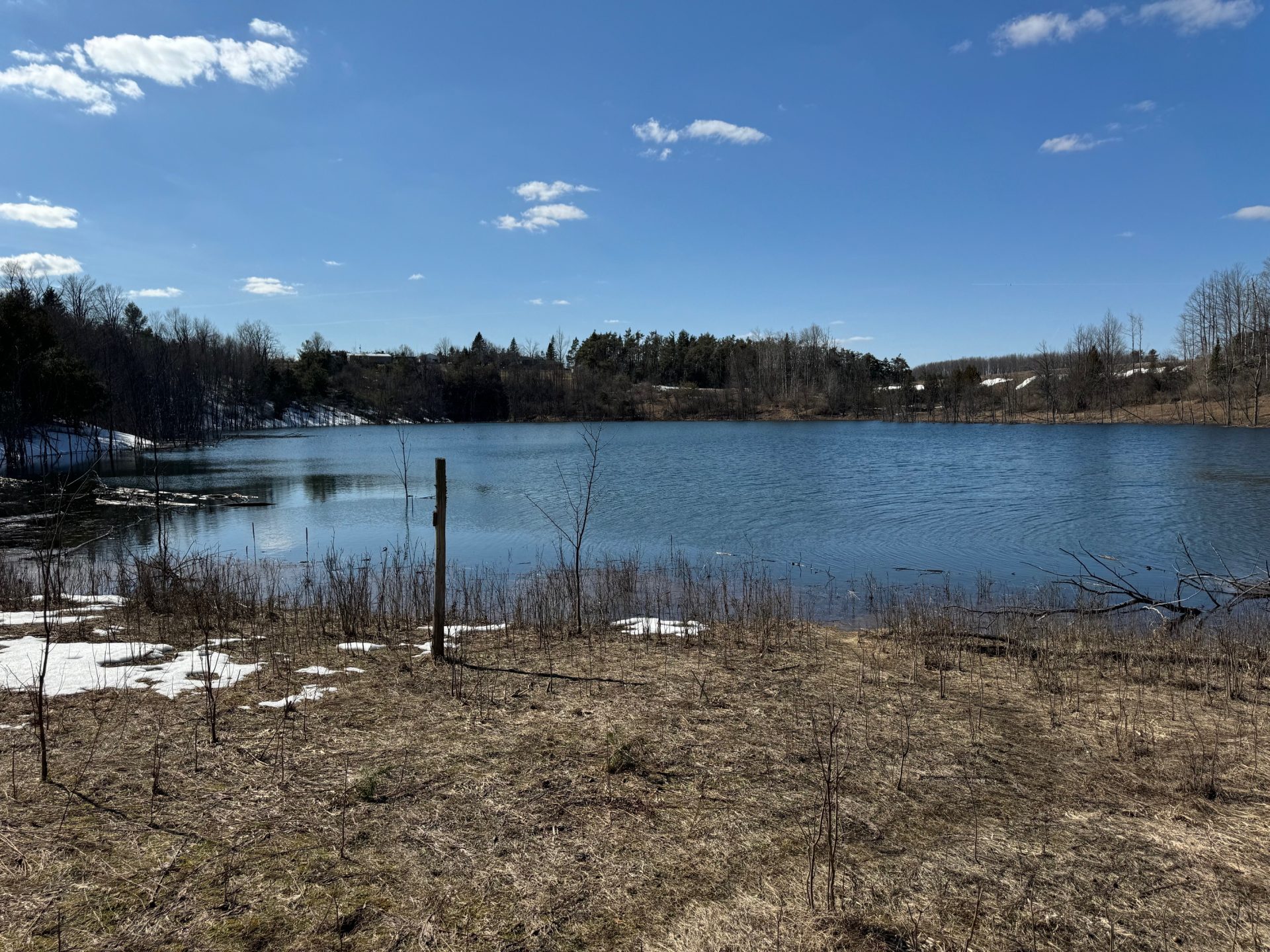
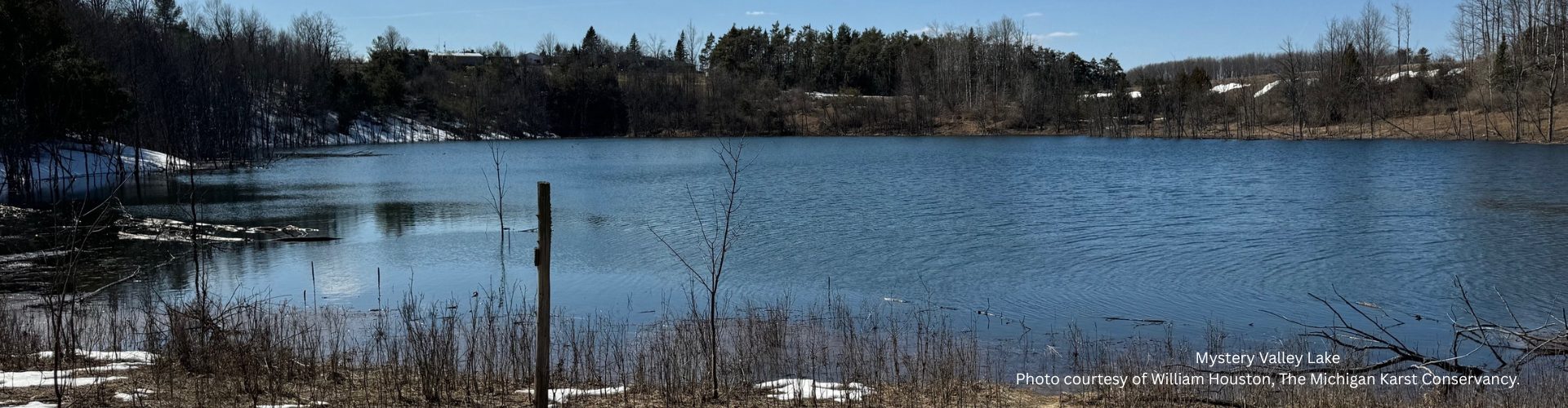
The lake in Mystery Valley can rise and fall, and at times even disappear, as water drains through underground systems. Photo courtesy of William Houston, The Michigan Karst Conservancy.
Why Are There So Many Sinkholes Here?
The short answer is water and rock working together over a very long time.
Beneath Northeast Michigan is a thick layer of limestone and shale known as the Traverse Group. Far below that sits another layer called the Detroit River Group, which contains gypsum and anhydrite.
These lower layers dissolve much more easily than limestone. As water slowly moves through cracks in the ground, it dissolves those minerals and creates underground cavities. Over time, the stronger rock above loses support and collapses, forming the sinkholes we see today.
If you want a deeper look at how this all works, it helps to understand the basics of karst terrain. That’s the landscape responsible for these formations, and once you understand it, everything out here starts to make more sense.
The Best Places to See Sinkholes Near Alpena
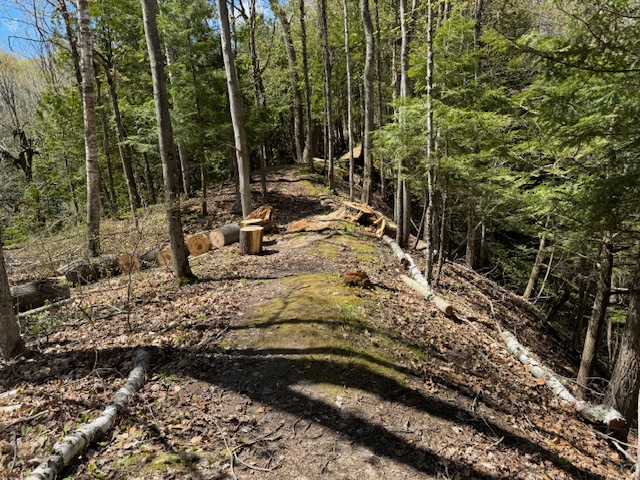
Walking the ridge between sinkholes offers a unique perspective, with steep drop offs on either side and a quiet forest setting. Photo courtesy of William Houston, The Michigan Karst Conservancy.
While many sinkholes are on private land, there are several incredible places where you can safely experience them up close.
Michigan Karst Conservancy Preserves
Some of the most impressive and accessible sinkholes are protected and maintained by the Michigan Karst Conservancy. Their preserves offer a chance to explore these landscapes on marked trails while helping protect them for the future.
Stevens Twin Sinks
This is often the first stop for visitors, and it is easy to see why.
Two massive sinkholes sit side by side, each about 200 feet across and roughly 85 feet deep. The trail loops around the rim, giving you different perspectives as you walk, along with a spur trail that leads to visible earth cracks in the surrounding forest.
Those cracks are a quiet reminder that the landscape is still changing.
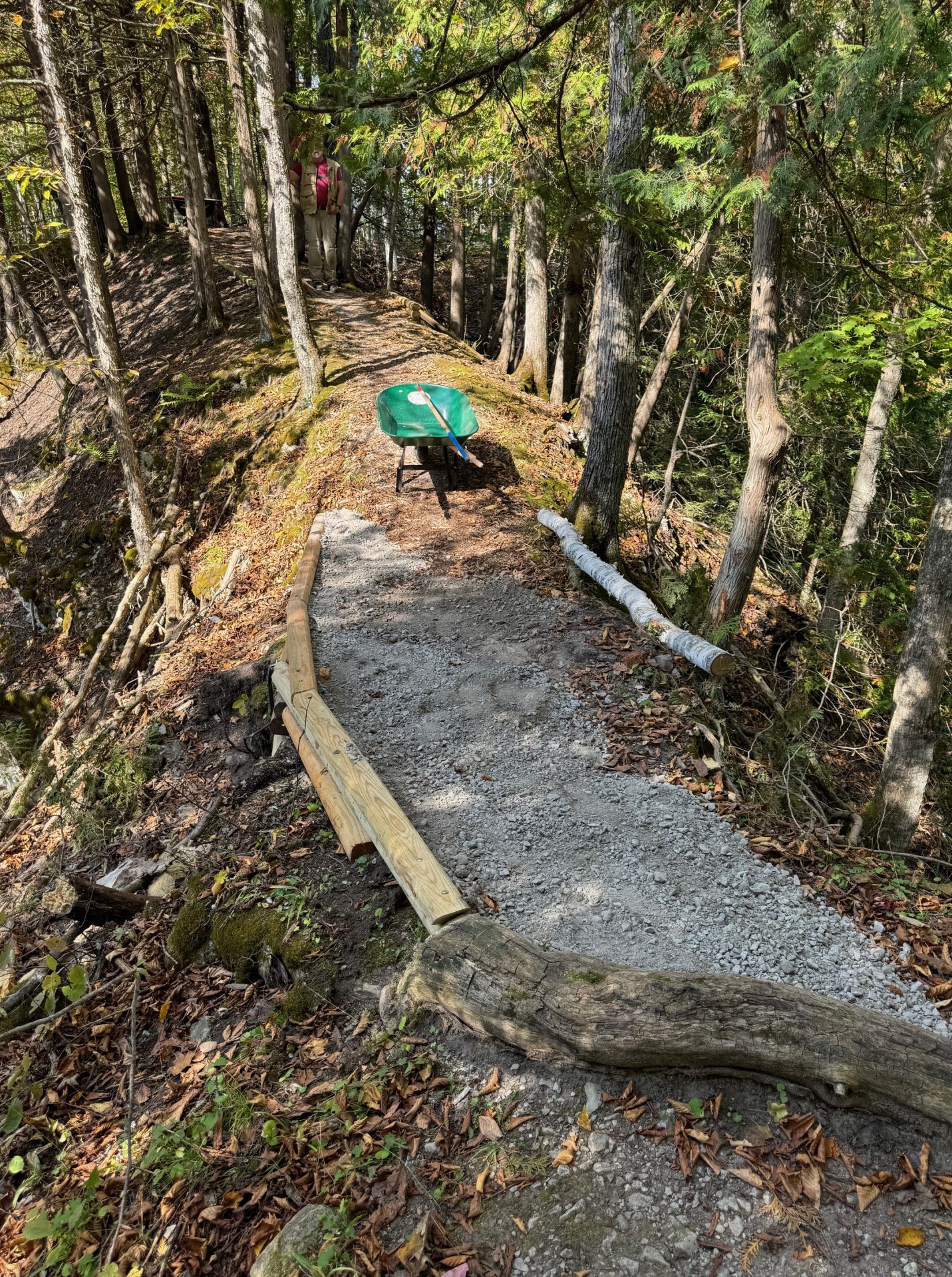
Maintained trails at Stevens Twin Sinks make it easier to explore the area while protecting the fragile landscape. Photo courtesy of William Houston, The Michigan Karst Conservancy.
Bruski Sink
Just across the road, Bruski Sink offers a different kind of story.
This sinkhole was once used as an illegal dumping site. Over several years, volunteers removed everything from old cars to hazardous materials, dramatically restoring the area.
Today, you can walk along the edge and look down into a sink that is deeper and more defined because of that cleanup. It is a powerful example of how conservation efforts can bring a place back to life.
Mystery Valley
A short drive north takes you to one of the most unique landscapes in the Great Lakes region.
Mystery Valley is not just a single sinkhole. It is a massive collapse valley, about 1.5 miles long and 150 feet deep.
As you follow the trails, you will pass long earth cracks, fossil beds, and a lake that sometimes fills and sometimes disappears as water drains underground.
It is one of those places where you slow down without even realizing it.
Other Sinkhole Locations to Explore
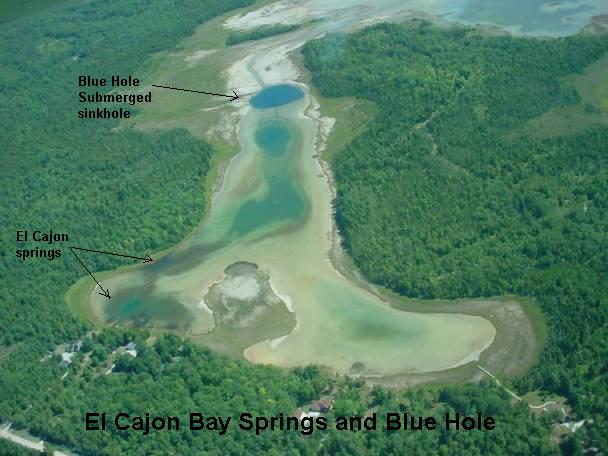
Aerial view of sinkholes in the Alpena area. Image courtesy of NOAA
Beyond the preserves, there are several other spots where you can experience sinkholes in different ways.
El Cajon Bay Sinkhole
Along the Lake Huron shoreline, El Cajon Bay offers something you do not expect to see in Michigan.
An underwater sinkhole sits just offshore, fed by underground springs. When lake levels are low, you can walk right up to the edge.
The water here has a different composition than the surrounding lake, with a faint sulfur scent and a steady flow that keeps it from freezing in winter.
Rockport State Recreation Area
Rockport State Recreation Area is worth a visit all on its own, but it also happens to be home to 13 sinkholes scattered throughout the park.
One of them drops more than 100 feet and is filled with water from an underground aquifer. As you explore the trails, you can also search for Devonian era fossils and walk through the remains of an old limestone quarry.
It is one of the few places where you are allowed to take a small piece of the park home with you.
Sunken Lake Park
If you are looking for a quieter stop, Sunken Lake Park offers a mix of camping, hiking, and sinkhole features tucked into a peaceful setting.
Trails wind through forest and past unique rock formations, making it a nice place to slow down and explore at your own pace.
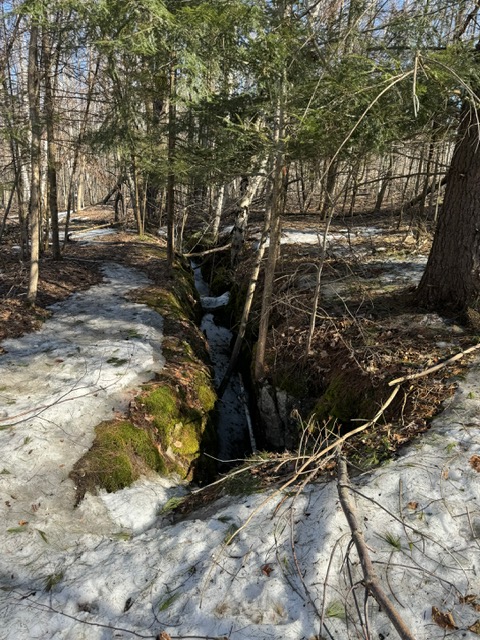
Earth cracks form as the ground slowly shifts and settles, offering a visible sign that the landscape is still changing. Photo courtesy of William Houston, The Michigan Karst Conservancy.
What Makes These Sinkholes So Unique?
There is more going on here than just holes in the ground.
Some sinkholes in the area reach depths of nearly 90 feet. Others connect to underground water systems that stretch for miles.
In certain locations, you will find:
- Fossils from marine life that lived more than 400 million years ago
- Cool, shaded microclimates at the bottom that support plant life not found nearby
- Underground springs with different chemical compositions than surface water
- Rare microbial life in submerged sinkholes that survives without sunlight
In places like El Cajon Bay and offshore sinkholes in Lake Huron, these systems even give scientists a glimpse into ancient forms of life on Earth.
It is one of those rare cases where a quiet walk in the woods can connect you to something much bigger.
What to Expect When You Visit
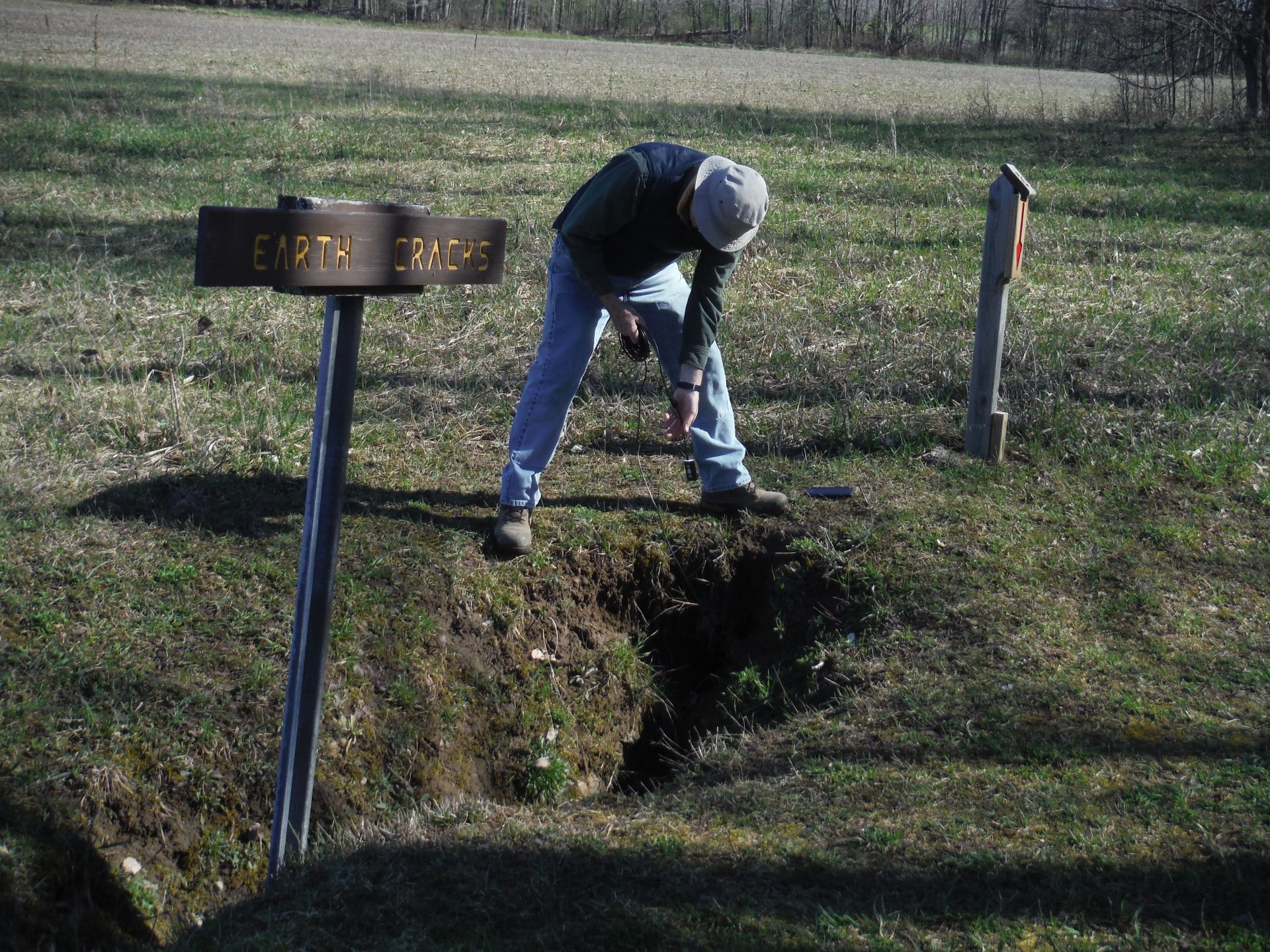
Some areas are marked to protect both visitors and the fragile terrain, so it is important to stay on designated trails. Photo courtesy of William Houston, The Michigan Karst Conservancy.
A little preparation goes a long way when exploring sinkholes.
- Many sinkholes are on private land, so stick to known public access points
- Trails are often natural and uneven, so good footwear helps
- Stay on marked paths, especially near edges
- Take your time, this is not a rush through kind of experience
Most of these locations are easy to pair with a day trip from Alpena, and each one offers something a little different.
A Quiet Reminder Beneath Your Feet
Exploring the sinkholes around Alpena is not just about checking off a destination.
It is about noticing what is usually hidden.
A small crack in the ground. A sudden drop in the forest floor. A lake that seems to come and go.
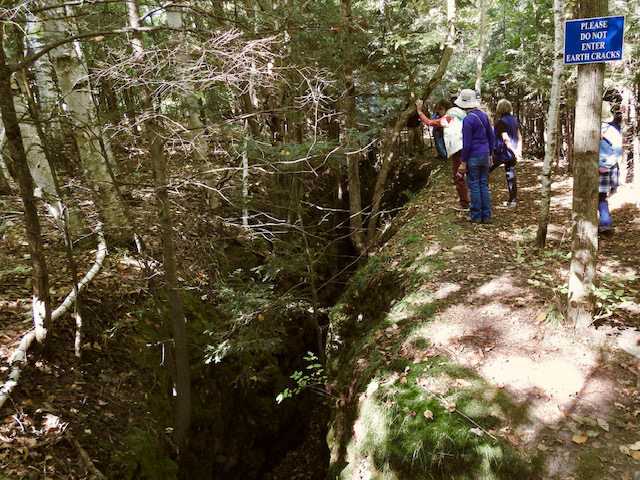
Exploring these areas on foot gives you a chance to see features up close that are easy to miss at first glance. Photo courtesy of William Houston, The Michigan Karst Conservancy.
These places invite you to slow down, look a little closer, and appreciate the kind of landscape that does not always reveal itself right away.
Want to Understand What You Are Seeing?
If you are curious about how all of this forms, take a few minutes to read our guide to karst terrain.
It will give you a whole new perspective before your visit, and once you are out on the trail, you will start to see Northern Michigan in a completely different way.
