
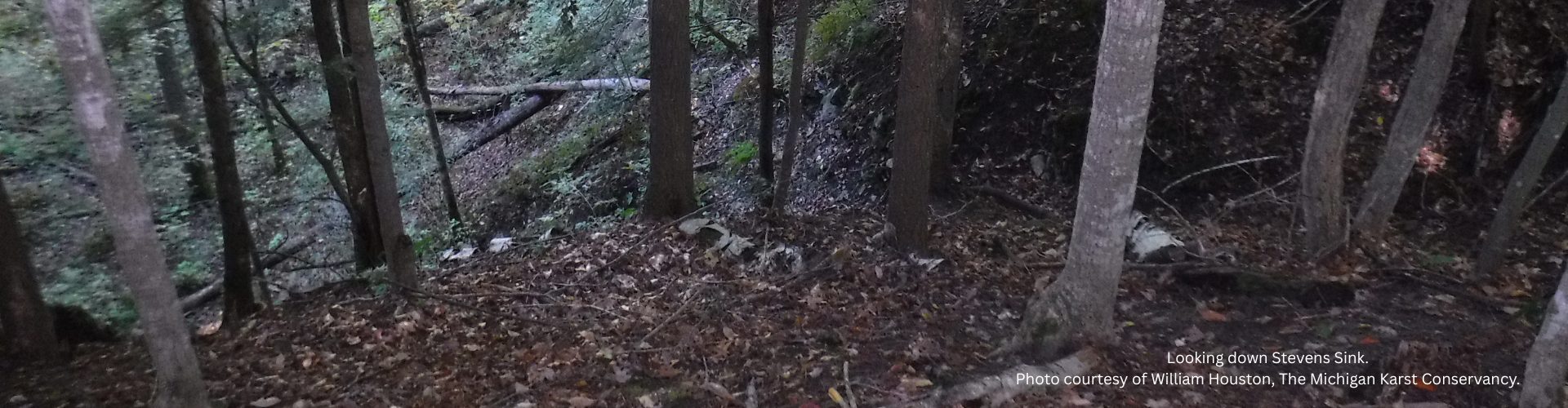
If you’ve ever heard about sinkholes near Alpena and wondered how they formed, you’re not alone. It’s one of those Northern Michigan surprises that catches people off guard. The answer starts with something called karst.
Once you understand what karst terrain is, the landscape around Alpena, Presque Isle, and even parts of the Upper Peninsula starts to make a whole lot more sense.
So, What Is Karst?
Karst is a type of landscape formed when water slowly dissolves certain kinds of rock beneath the surface.
These rocks are usually limestone or dolomite, which formed millions of years ago from ancient sea life. Over time, rainwater seeps into the ground, picks up carbon dioxide from the soil, and becomes slightly acidic. That acidic water begins to dissolve the rock.
It’s a slow process, but over thousands to millions of years, it creates something pretty remarkable underground.
What Makes Karst Terrain Unique?
Karst landscapes often look fairly normal at first glance, but underneath, they are full of hidden features.
Here are a few things that make karst terrain different:
- Water tends to move underground instead of across the surface
- There may be very few rivers or lakes in some areas
- The ground can contain caves, cracks, and large underground voids
- Sinkholes can form when the surface collapses into those voids
In places like Northeast Michigan, this underground activity is what creates the dramatic sinkholes people come to see.
Sinkholes are often recognized by their rounded, bowl like shape. They form as rainwater and runoff slowly dissolve layers of rock beneath the surface, creating underground tunnels and caverns. Over time, these spaces can collapse, causing the ground above to sink and form the features we see from the surface.
How Does Karst Form?
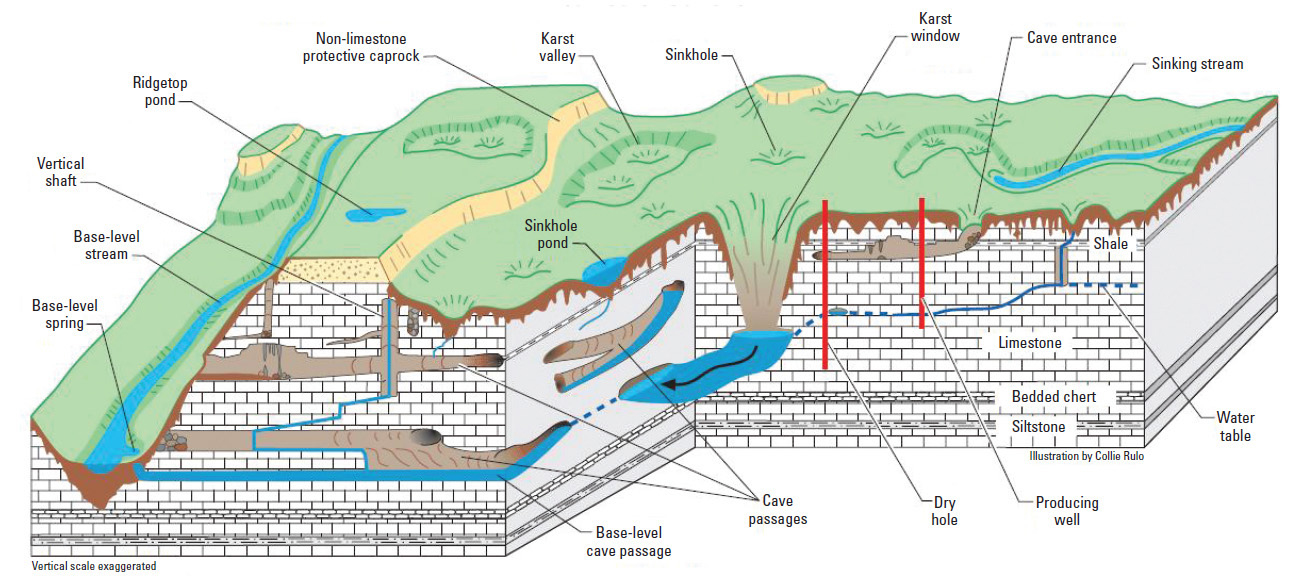
A simplified look at karst terrain, showing how water moves underground through rock layers, forming caves, sinkholes, and hidden drainage systems.
Source: USGS illustration via Wikipedia Commons
It all comes down to three simple ingredients working together over time:
- Limestone or similar rock
- Water
- Carbon dioxide
Rainwater mixes with carbon dioxide in the soil and forms a weak acid. As that water moves through small cracks in the rock, it slowly widens them.
Eventually, those cracks can grow into:
- Underground channels that carry water
- Caverns and caves
- Large empty spaces that may collapse and form sinkholes
This process continues both above and below the water table, shaping the land in ways you often cannot see from the surface.
Why Karst Matters More Than You Might Think
Karst landscapes are fascinating, but they are also important in everyday life.
Because water moves quickly through these underground systems, it does not get filtered the way it would through soil. That means anything entering the ground, like runoff or waste, can travel quickly into groundwater.
In some areas, groundwater can move surprisingly fast, even miles in a matter of days.
At the same time, karst areas create unique ecosystems. Some sinkholes and caves support rare plants and animals that you would not expect to find elsewhere.
Karst in Michigan? Yes, Really
When people think of caves and sinkholes, they often picture places much farther south. But Michigan has its own version of karst terrain.
Here is where you can find it:
- Northeast Lower Peninsula, especially around Alpena and Presque Isle
- Southeast Michigan, including parts of Monroe County
- Upper Peninsula, along the Niagara Escarpment
In Northeast Michigan, the combination of limestone and gypsum creates especially interesting features, including large sinkholes and even disappearing lakes.
A Quick Note About The Michigan Karst Conservancy
If you plan to explore these areas, you will likely come across the work of the Michigan Karst Conservancy.
They have been protecting and studying Michigan’s karst landscapes since 1983. Their preserves near Alpena include some of the most accessible and fascinating examples of karst terrain in the state.
They also help make these places easier to understand through research, education, and guided experiences.
What This Means for Your Visit
Understanding karst helps you see Northern Michigan a little differently.
That quiet patch of forest might be hiding a deep sinkhole.
That small crack in the ground could lead to an underground water system.
That lake you see one day might look completely different the next.
It adds a sense of curiosity to exploring this region, and it makes places like Alpena even more memorable.
Coming Up Next
Now that you know what karst terrain is, the next step is seeing it in action.
In our next guide, we explore the sinkholes near Alpena, where you can walk the trails, stand at the edge of these formations, and experience this unique landscape for yourself.
👉 Read our guide to exploring the sinkholes near Alpena
